
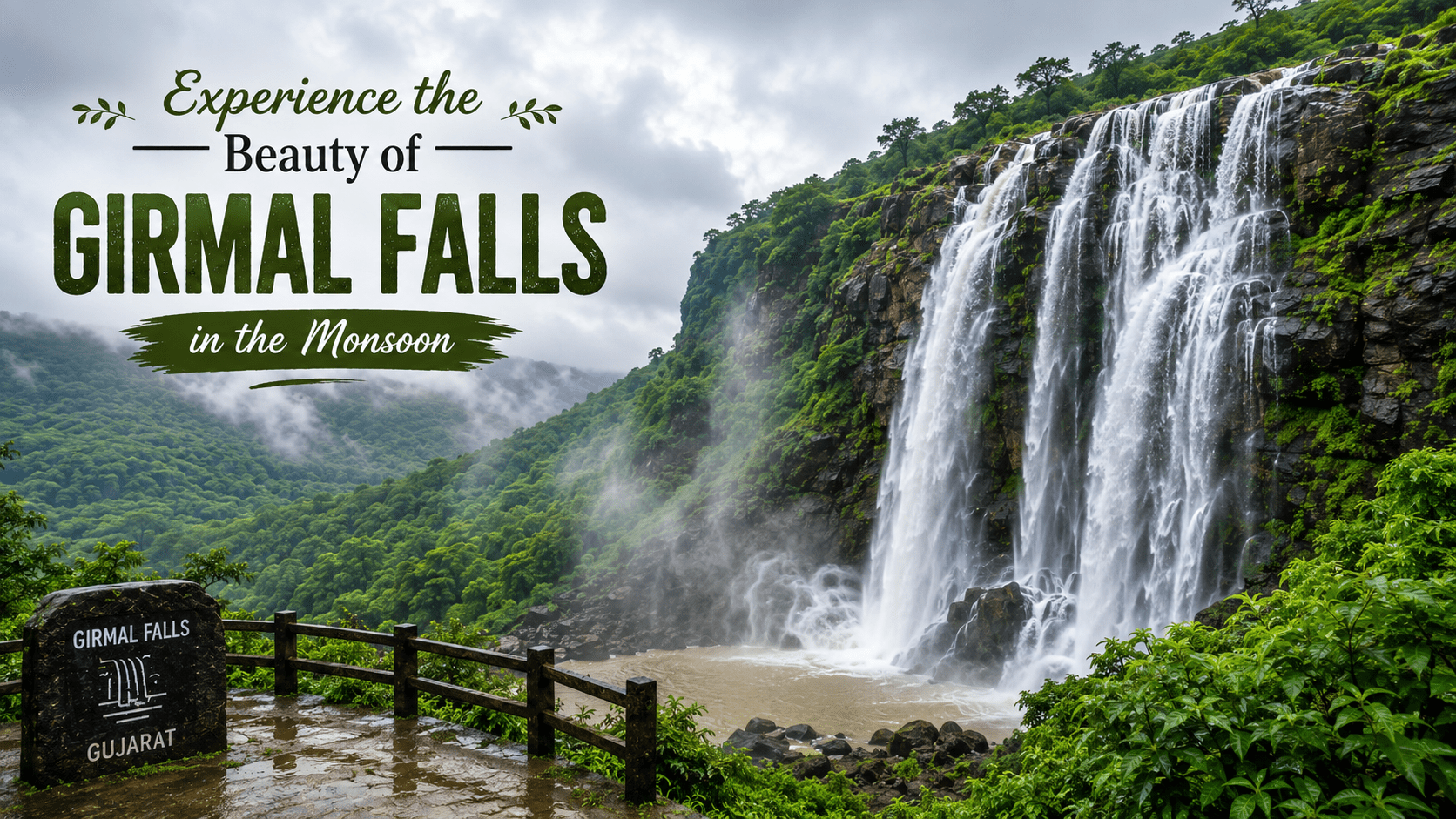
It’s a specific section of road somewhere just outside Saputara, which most people drive right over. As soon as the monsoon season begins, the greenery and the beauty of the place start attracting everyone from Gujarat to visit. Tucked away in the remote Dang district, Girmal Falls transforms itself literally overnight from nothing more than a dusty cliff face into an utterly thundering cascade of water.
It’s a place that some locals have nicknamed “the Niagara of Gujarat”, and while initially the comparison seems ridiculous, as the spray from the Gira River batters you and drowns out the surrounding jungle, standing at the edge, you start to see the parallels.
There’s Half the Fun in Just Getting There
You’re not going to drive up to Girmal Falls by mistake. It’s set back in the dense forests of the Dang district, and the drive there is as much of an experience in building anticipation as is the waterfall itself. Winding roads snake through hills that are soon transformed into the deepest green after the rains start to set in.
You’ll drive past some surprisingly secluded tribal villages where life has not altered greatly over many years – women with firewood on their backs returning home, children who will dodge you between bamboo huts, and yes, a water buffalo that’ll be blocking the road because it just can.
Most tourists stay in Saputara, which is the closest major hill station. There are plenty of good hotels and easy road access to it, from nearby places such as Surat and Ahmedabad, or Nashik for those travelling from Maharashtra. From Saputara, a scenic yet bumpy journey will lead you to the falls.
How the Monsoon Changes Everything?
Visit Girmal Falls in April and you’ll wonder what the fuss is about a thin trickle over dry stone, nothing photo-worthy. Come back in late July and it’s a completely different waterfall. The volume, the noise, the mist rising off the rocks, none of it exists outside monsoon season.
There’s a particular hour, usually early morning, when fog sits low over the valley and the falls seem to appear out of nowhere as you walk toward the viewpoint. That moment alone is worth the drive. By mid-morning, the fog burns off, and you get the full, uninterrupted view instead of water dropping from a serious height, throwing up enough spray that you’ll feel it on your face from several meters back.
What You’ll Actually Find When You Get There
There’s a marked viewpoint, and it’s there for a reason: the current below gets dangerously strong once the rain is heavy, so this isn’t the place to go looking for a closer selfie spot. A few small stalls near the viewpoint sell chai and bhajiya, and honestly, hot bhajiya in the cold, wet air might be reason enough to make the trip.
If you have time, wander into the nearby villages instead of turning straight back. The Dangi tribal communities here aren’t set up for tourism in any polished way, which is precisely why a short visit feels genuine rather than staged. Nobody’s selling you a “cultural experience”; you’re just passing through someone’s actual life for an afternoon.
A Few Things Worth Knowing Before You Go
July and August give you the falls at their fullest, though that also means unpredictable weather. Therefore, check for heavy rain warnings before setting out, since the ghat roads can turn slippery fast. Wear shoes you don’t mind ruining a little. Bring a raincoat rather than an umbrella, since wind near the falls makes umbrellas mostly useless. And keep some cash on hand; the roadside stalls aren’t running card machines out here.
None of this is complicated advice, but it’s the kind of thing that saves you from standing at a waterfall in flip-flops, wondering why your feet hurt.
Where the Trip Might Take You Next
Girmal Falls has a way of making you want more of this: quiet roads, wet hills, places that don’t feel overrun. If that’s the kind of travel you’re drawn to, Goya Hills offers a similar rhythm, just a few hundred kilometers east in the Aravalli hills near Udaipur. It’s a private villa property built around the same idea Girmal Falls runs on without trying: slow down, let the landscape do the talking.
You can look through what Goya Hills has to offer if you’re already thinking about where this monsoon trip leads next.


