
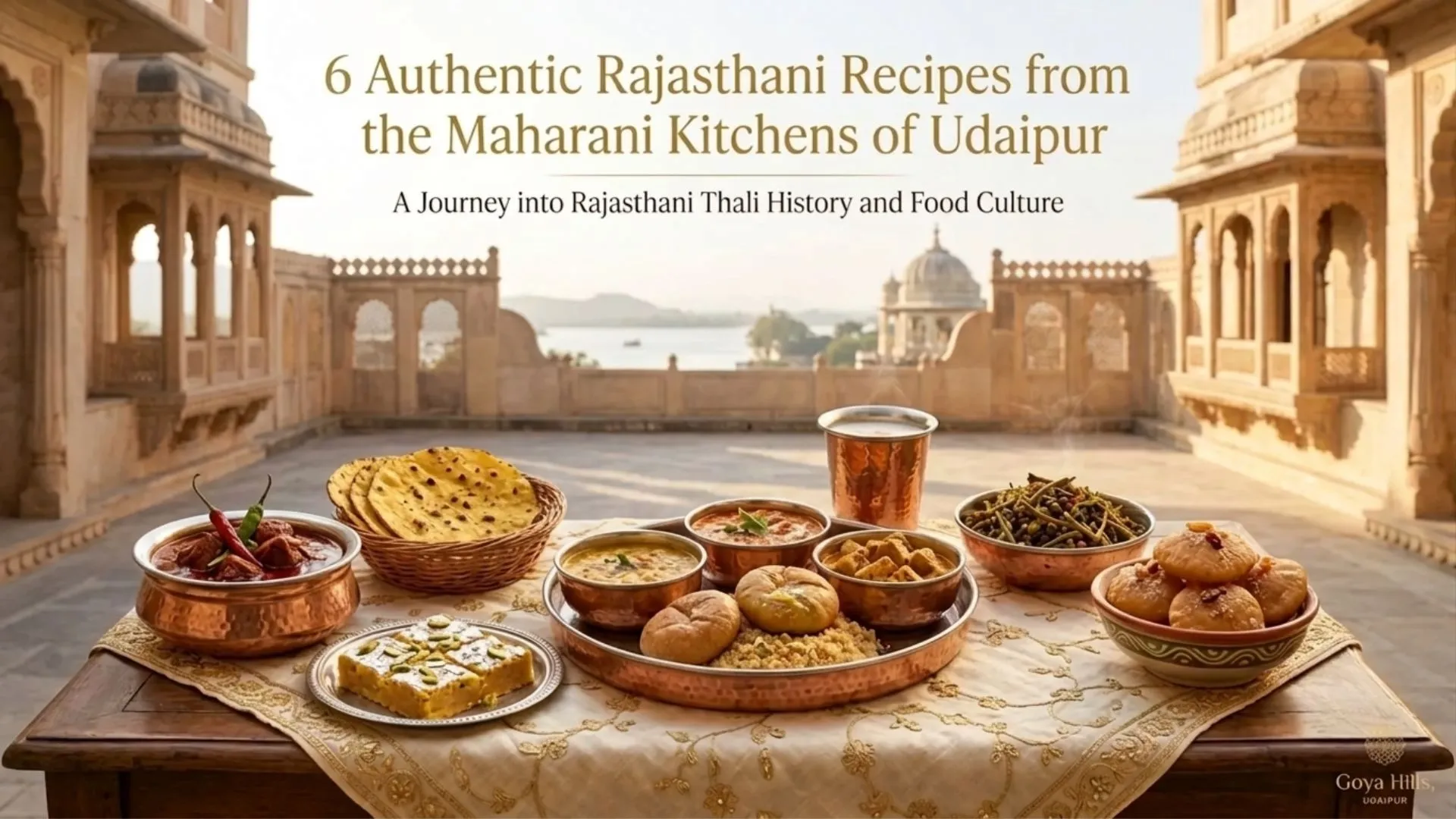
The real magic of the Mewar region still lives on from generation to generation, passed down recipes that were once cooked in the royal queen’s kitchen only. The regal family of the Mewar region are one of the oldest living dynasties that has built the regional, traditional and authentic food tradition that is bold, deeply satisfying and also centuries old. The traditional Rajasthani food recipes are slow-cooked, and the spices used in the dishes are all local ingredients. These are the dishes passed down through generations as a living legacy.
In the present time, these royal recipes and dishes belong to everyone. This blog will give you information on the 5 authentic traditional Rajasthani food recipes right from the Maharani Kitchens of Udaipur, which will give you a glimpse into the Rajasthani Thali history and right into the heart of Udaipur food culture.
A Quick Look at Rajasthani Thali History
Right before we dive straight into the royal recipes of the Mewar queens, let’s take a glimpse into the history of Rajasthani thali and understand why the table is served so grandly.
The thalis of Rajasthan are not just a meal. It is a full platter that comprises various tastes in a single plate. This thali consists of a perfect balance of sweet, spicy, tangy and savoury flavours, all in one. Since the beginning of the royal dining, these thalis are served with 10-15 items on a plate on a normal day. On special occasions, these thalis would be served with additional dishes during festivals or weddings. The sweets that used to be served to the royal kings and their guests would be decorated with edible gold and silver foil.
The luxury and necessity were the factors that helped build the Udaipur food culture. The desert climate of Rajasthan is not suitable for the growth of fresh vegetables, hence the unavailability of a variety of vegetables. So the cooks of the royal family (commonly known as “Maharaj Ji”) mastered cooking dishes using the dried beans, lentils, gram flour (commonly known as besan) and preserved ingredients to cook incredible dishes. The gravies made for the curry dishes would be made out of yoghurt, ghee and online nd garlic. This style became the signature part of the Mewar cooking.
Now, let us bring those flavours to your kitchen.
1. Dal Baati Churma — The Pride of Every Rajasthani Thali
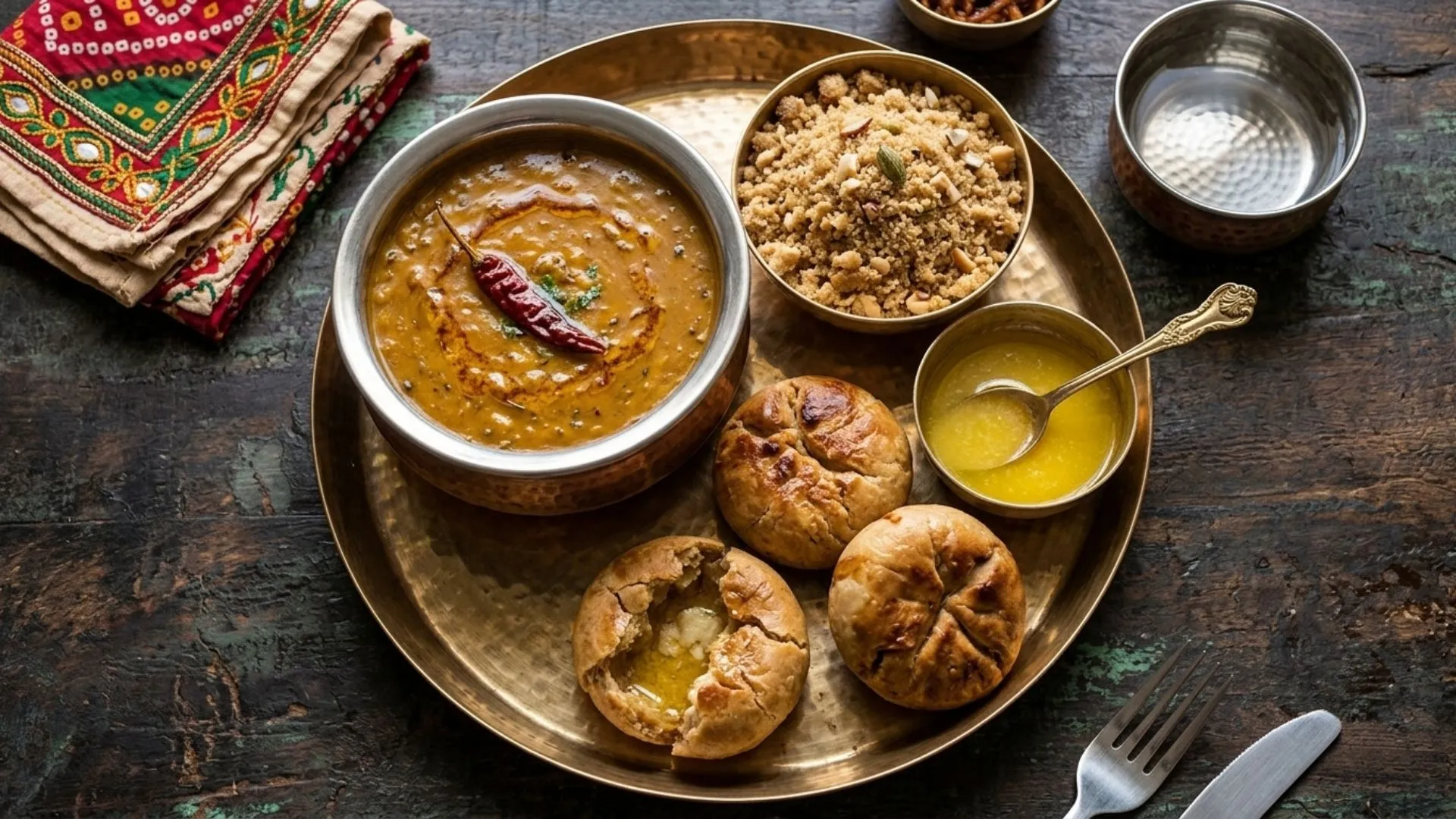
There is no recipe of Rajasthani food that is more connected with traditional Rajasthani cuisine than Dal Baati Churma. This is the perfect meal in itself and a staple of every Rajasthani thali, whether it be the small roadside restaurant or the royal feast in Udaipur.
It consists of three parts of Dal Baati Churma. Dal is a curry made from lentils, flavoured with spices and tempered with gram and other spices. The baati is a hard, round wheat indian bread, which is baked in a clay oven or over fire and soaked in desi ghee by dipping it in it liberally. Churma is a sweet crumble made from jaggery/sugar, ghee and broken baatis.
Simplified method of its preparation:
Baati: Knead the wheat flour with ghee, a little salt and an adequate amount of water as an when necessary to make a stiff dough. Shape into small balls and bake them at 180°C in an oven until they have a golden, hard crust (30-35 mins). Once cooked, open and pour a good amount of hot ghee over them.
Cook 5 types of dal: chana dal, moong dal, masoor dal, toor dal and urad dal for the Dal. Make a curry paste using ghee, cumin, mustard seeds, hing (asafoetida), garlic, dry red chillies and tomatoes. Add this to the cooked dal and cook thoroughly.
For the Churma: Coarsely crush the remaining baatis and cook them for a short time in ghee. Include powdered sugar/jaggery, cardamom powder and chopped dry fruits. Mix and serve warm.
Royal touch: Dal in the Mewar kitchen is prepared with a special spice mixture and is cooked for a few hours. The traditional method of baking the baatis was over hot coals, which adds a smoky flavour to the baked treat and which no modern oven can quite replicate, but close enough to make anyone happy at the table.
2. Laal Maas — The Fire of the Mewar Kingdom
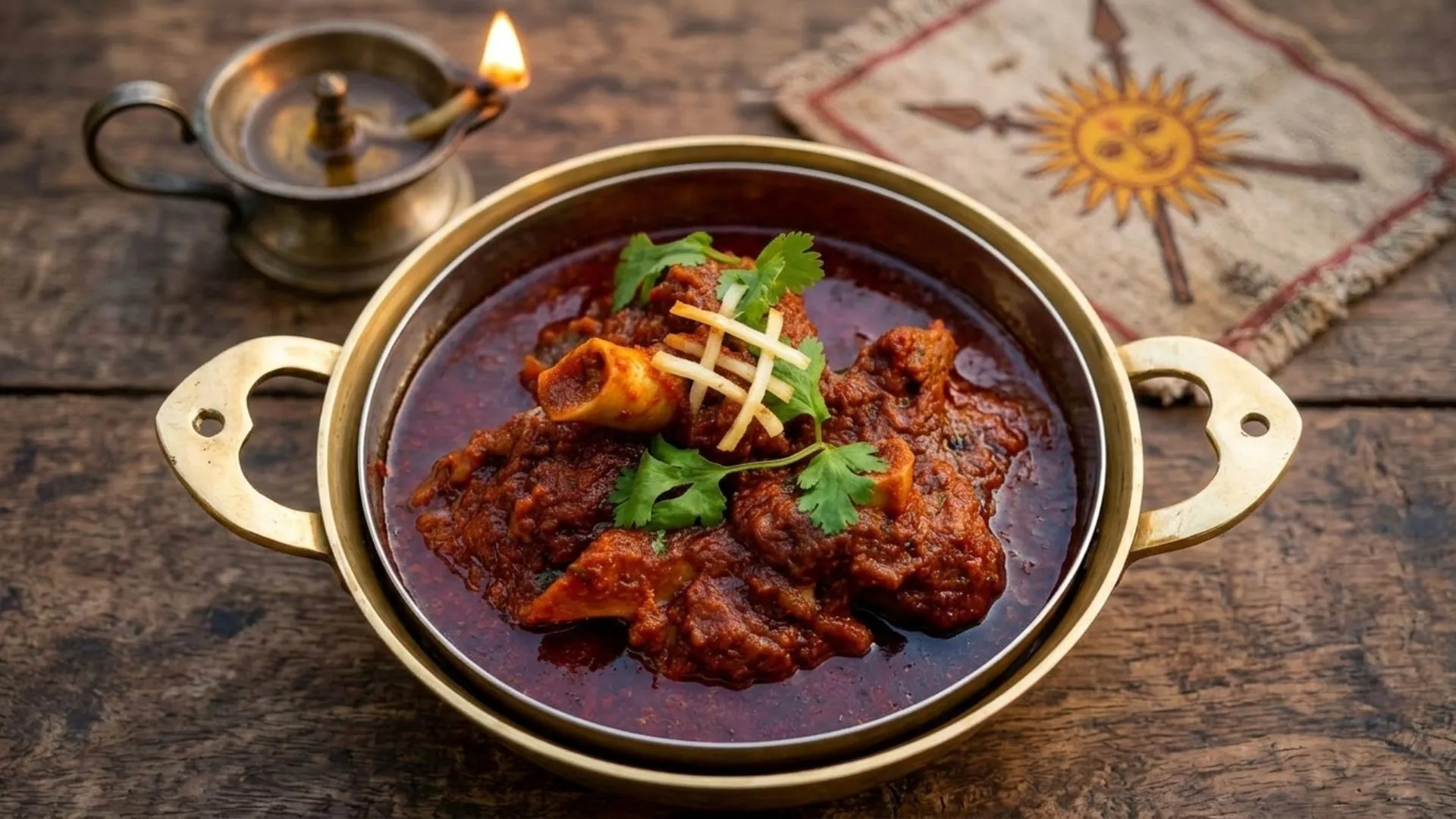
There is nothing that can match the power and identity of the food of the royal kitchen of Mewar, like Laal Maas. It is a red curry for mutton, which was first eaten in the hunting camps of the Rajput Kings. This curry was prepared for the Maharanas of Udaipur when they came home from long hunting trips. It was very slowly cooked, very spicy and very good.
How it’s prepared: Laal Maas is a traditional preparation of mutton where whole red chillies, yoghurt and strong spices are used. The name is literally “red meat” because of the bright red colour of the dish.
How to prepare the dish:
- Soak mutton in thick curd, turmeric and salt for 2 hours or more.
- In a heavy pot, cook a generous amount of ghee and then add whole red chillies, preferably Mathania of Rajasthan, in order to get the colour and mild flavour.
- Stir in finely chopped onions, and fry until dark golden. Add ginger-garlic paste and cook for 5 minutes.
- Add marinated mutton and cook on high heat for 10 minutes, stirring regularly.
- Add a little water, cover and slow cook for 45 minutes to 1 hour until the mutton is fall-off-the-bone tender.
- Sprinkle with a little garam masala and a little fresh ghee.
- Serve with makki ki roti (corn flatbread) or plain phulkas.
Where to taste the authentic recipe:
The recipe of the Laal Maas served at the Sunset Terrace Hotel at Fateh Prakash Palace in Udaipur is more than 100 years old and made with quality mutton, whole red chillies and Kashmiri saffron, retaining its originality in the Mewar royal kitchen.
3. Gatte Ki Sabzi — The Desert’s Cleverest Creation
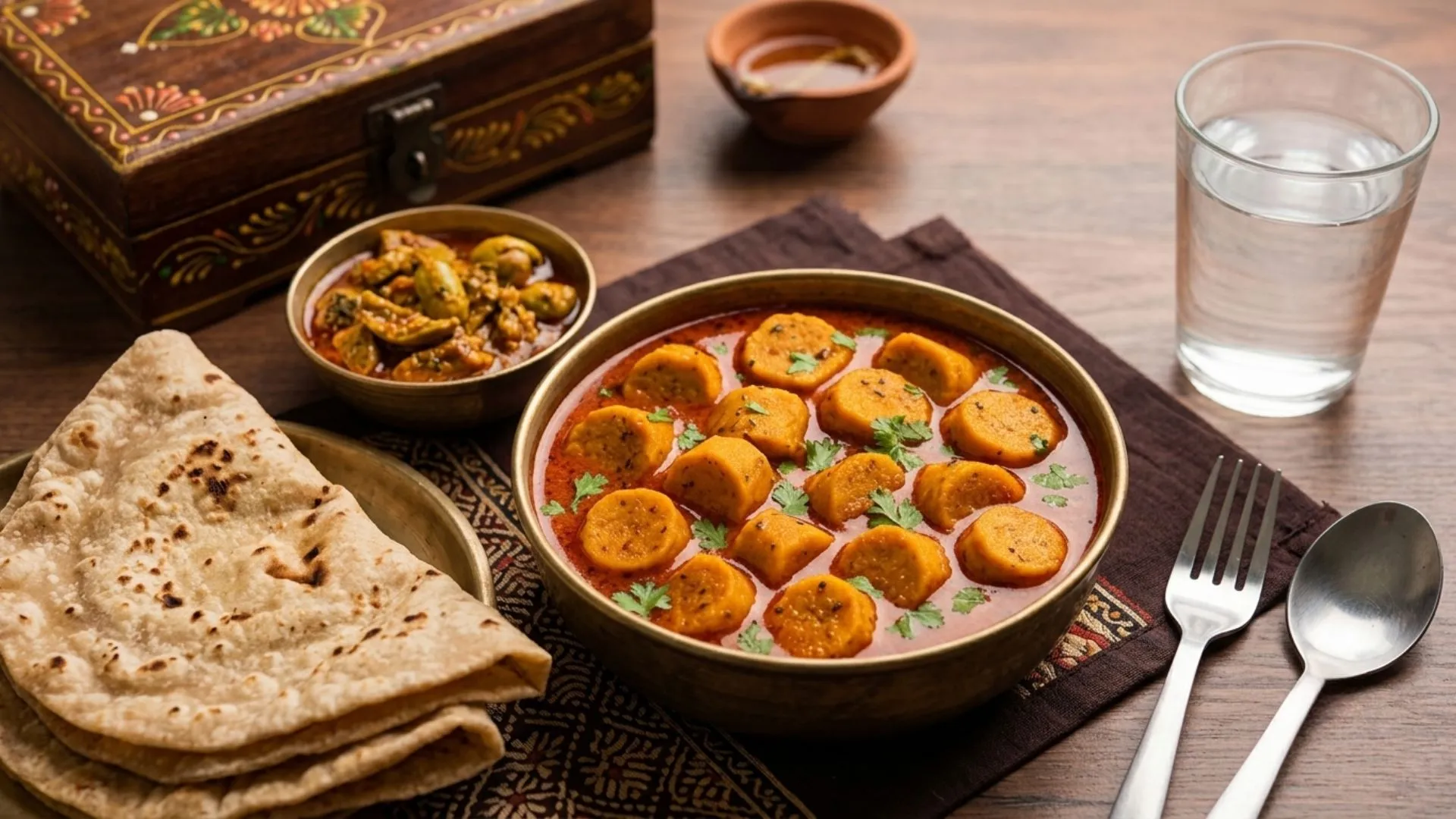
The story of Gatte Ki Sabzi is a story of brilliant cooking under pressure. In the arid deserts around Udaipur and Rajasthan, fresh vegetables were a luxury. So, the Maharani kitchens came up with a genius solution — they made “vegetables” out of gram flour.
Its ingredients are besan (chickpea flour) and when boiled, they are then simmered in a tangy and spiced yoghurt-based gravy. It makes for a creamy, generous and flavourful meal.
Simplified recipe for making it:
For Gatte: Add besan, ajwain (carom seeds), red chilli powder, salt, coriander powder and curd to a tablespoon. Repeat kneading until the dough is quite stiff. Roll up into long cylinders and boil in salted water for 10 minutes. When set, break into small pieces.
For the gravy: Whisk curd with besan and spices. Add oil to a pan and heat, then add cumin seeds and mustard seeds. Stir in turmeric and red chilli powder and then, pour in the curd mixture slowly so that it doesn’t split. Stir in boiled gatte pieces, and cook for 10-15 minutes.
Serve with roti or steamed rice, and garnish with fresh coriander.
Why it matters:
This dish is quintessential of the resourcefulness of Udaipurians food culture as it transforms the basic shelf stable ingredients into something extraordinary.
4. Ker Sangri: the Sacred Desert Pickle of Mewar
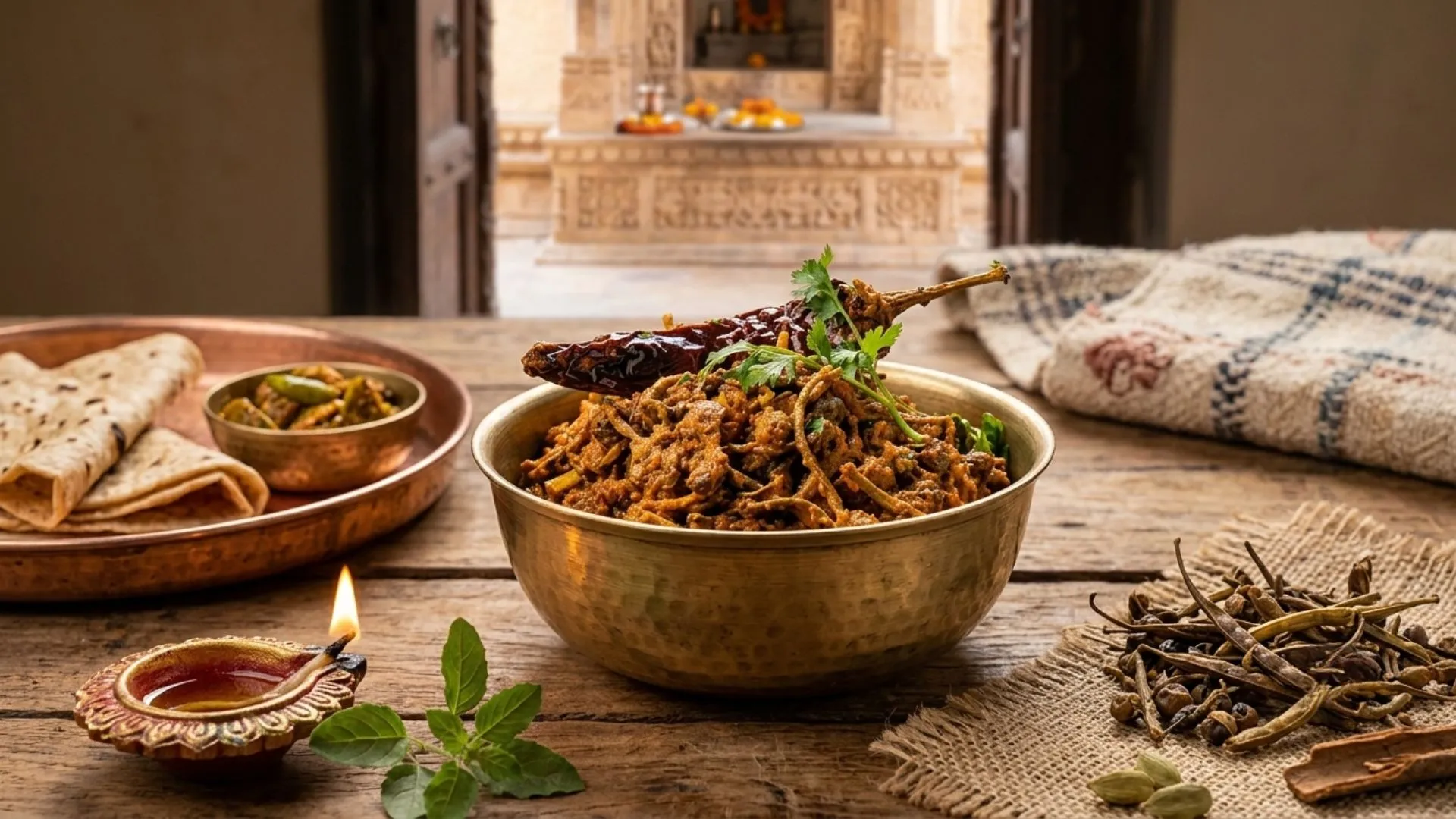
The traditional Rajasthani food recipes, Ker Sangri is of great cultural and historical significance. This dish is prepared with two wild ingredients, ker, a small berry which grows on desert shrubs, and sangri, dried bean of Khejari. Both are present in the arid land of Rajasthan and were traditionally collected and stored by the desert dwellers.
It is a dry vegetable dish made with spices and tangy taste, which is mainly prepared in thali or served as a side dish with dal and roti in Rajasthani cuisine. Ker Sangri is one of the most traditional gourmet dishes of Rajasthan and a must at Rajasthan wedding.
Simplified method of making it:
- Dry ker and sangri and soak them in water overnight. Drain, boil until soft.
- In a pan, heat mustard oil, add mustard seeds, cumin, dried red chillies and hing.
- Stir in boiled ker sangri, coriander powder, red chilli powder, amchur (dry mango powder) and salt.
- Cook on medium heat for 10 minutes, stirring until the spices are evenly distributed.
- Top with a spoonful of yogurt to balance and serve at room temperature.
Royal touch: In Mewar kitchens this dish was often made in large quantities and stored for a number of days, even served to the royal guests as a reflection of the real taste of the land of Rajasthan.
5. Ghevar- The Net styled sweet dish served hot
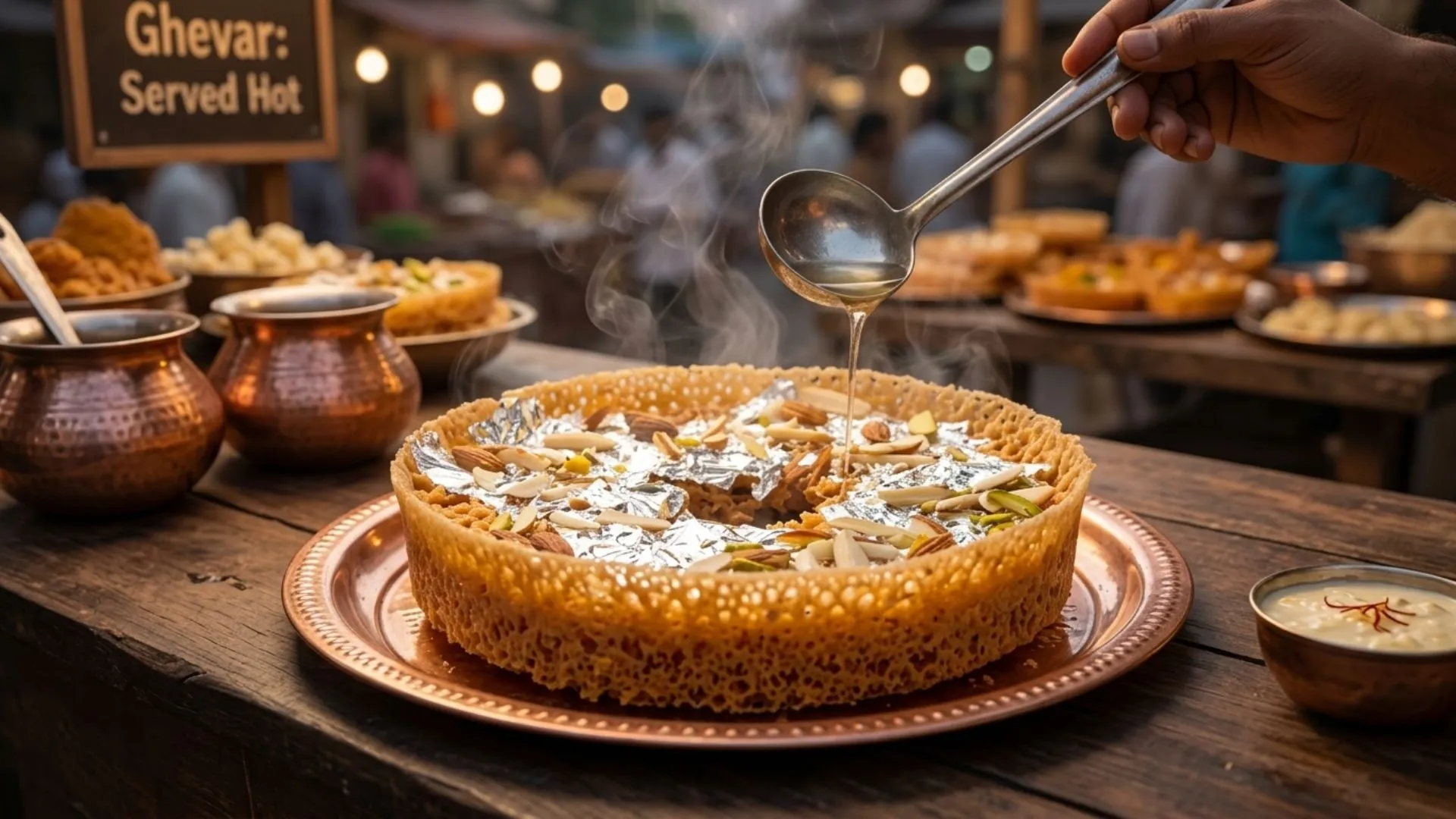
The most authentic traditional Rajasthani food recipes of Rajasthan, which are a favourite amongst all the sweet tooths, are Ghevar. Ghevar is a crispy, honeycomb-like disc structure that is made from flour and ghee. It is then soaked in sugar syrup and topped with yummy rabri and decorated with nuts.
To get the same texture as the Mewar royal kitchen food, you need to achieve its delicate, lacy texture that requires ice-cold ingredients and a specific high-heat frying technique.
The Key Ingredients and Their Prep:
- For the batter: 1.5 cups of all-purpose flour (maida), 1 tbsp besan (gram flour), 0.5 cup ghee, 1 cup cold milk, 1 tbsp lemon juice and 2-3 cups of ice-cold water.
- For the Syrup (Taar): For the sugar syrup, you have to take 1.5 cups of sugar, 1 cup of water, a pinch of saffron and 0.5 tsp of cardamom powder.
- For the Topping: 200g thickened milk, which is Rabri, some sliced almonds and chopped pistachios.
Step-by-step Instructions:
- Prepare the batter: Prepare the batter by mixing the ghee with 4 cubes of ice until it forms a smooth, creamy butter. The batter should be absolutely lump-free. Therefore, you should add all the ingredients together with cold milk, half the flour and some ice-cold water. After a fine paste, add the remaining flour, water and lemon juice. The batter should be thin.
- Fry the Ghevar: After the Ghevar batter is ready, heat a heavy-bottomed pan and fill it halfway with ghee and oil. After the oil and ghee have properly heated up, take a part of the batter and pour it into the centre of the hot ghee in a thin, continuous stream. Repeat this 6-8 times, depending on the desired thickness.
- Shape and Drain: Make use of the wooden skewer to gently press the centre down into the ghee. Once the edges of the ghevar turn golden brown, carefully lift it out and drain the excess oil out of the ghevar.
- Soak and Garnish: After the Ghevar is ready, make the sugar syrup. Boil water and add sugar. Boil this mixture till you reach one string consistency. Submerge the warm ghevar in the syrup for 10 seconds, then remove and place on a wire rack to drain excess syrup. Top the ghevar with a thick layer of rabri, chopped nuts and saffron.
This rich and heavenly preparation is especially made during festivals, weddings or special occasions. Explore the Udaipur food culture by trying this heavenly sweet dish.
6. Malpua with Rabri – The Maharani’s Sweetest Offering
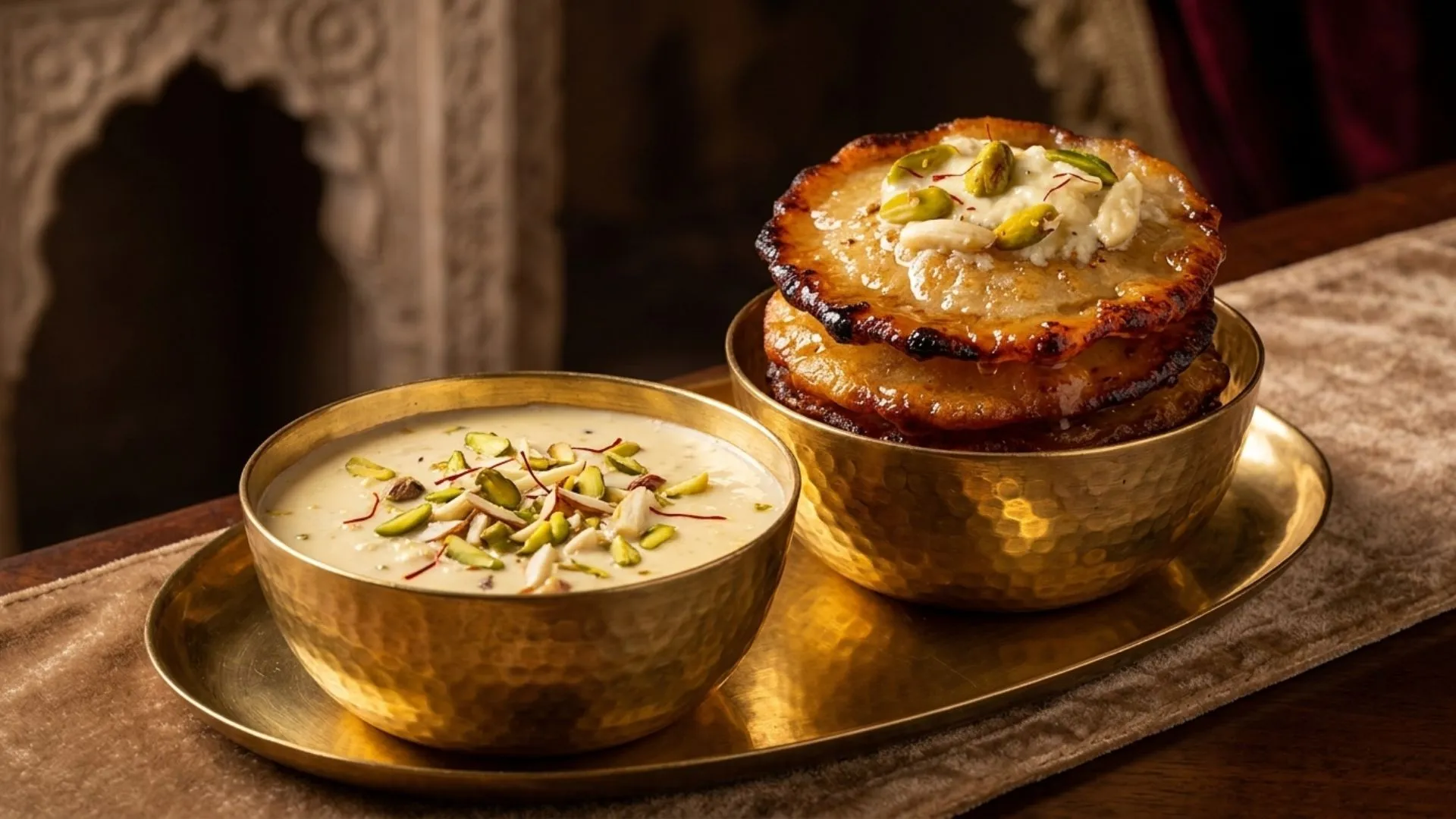
A visit to the Maharani kitchens of Udaipur is not complete without a peek at the sweets. Malpua with Rabri is undoubtedly one of the most popular traditional Rajasthani food recipes in Udaipur’s culinary scene.
How it’s made: Malpua is a soft, fluffy Indian pancake which is cooked in oil until golden brown and then dipped in sugar syrup. It is served with rabri which is a thick creamy reduced milk dessert flavored with cardamom, saffron and garnished with cut almonds and pistachios.
The simplest way to make it:
Mix all-purpose flour, semolina, mashed ripe banana, fennel, cardamom powder and milk to make a smooth pourable batter with it for Malpua. Allow to rest for 30 minutes. Add batter to the hot ghee and fry spoonfuls until golden on both sides. Dip immediately in warm sugar syrup.
Rabri: Heat full-fat milk in a heavy pan, large enough to boil in, over a boil. Heat slowly to low, stirring and scraping sides frequently until milk thickens. This takes 45–60 minutes. Add saffron, cardamom powder and sugar to this when it has become thick and creamy. Top with nuts.
Serve warm Malpua with cold Rabri for the perfect contrast.
Such a mixture was a part of the royal thali when festivals and celebrations were held especially during the Holi and Navratri. It was a very rich, elegant dessert, and it was certainly a Maharani dessert.
The uniqueness of Udaipur Food Culture
Each of the above dishes has one thing in common: They were created by a combination of royal desire, the necessity of the desert, and longstanding tradition.
The philosophy of the Mewar royal kitchen food is to cook slow, to use authentic ingredients and to create flavours that are bold but not overpowering. The cooks who served Maharajas and Maharanis were happy that they were able to pass down their wisdom and most cherished recipes through the generations.
Today, you don’t just eat while dining at a Rajasthani thali in Udaipur; you are eating an experience. You are tasting history. You’re enjoying meals just like warriors before their battles, royal families before their celebrations, and communities before their weddings and festivals today.
Be it in the kitchen at your home or at Udaipur, where you can experience the traditional Rajasthani food recipes straight from the source, one thing is certain: the traditional Rajasthani food recipes will be etched in your memory for a long time.
Taste the Royal Cuisine of Rajasthan
Goya Hills is a luxury private villa in Udaipur that has a wide range of villas catering to the different needs of the clients. They have a 3BHK, 1BHK and 8BHK villa in the city that has separate kitchens. The chefs available in the villa cook yummy food.
So if you are planning to come to Udaipur, then you should definitely book your stay at this villa. The villa is situated amidst nature, giving the guests a peaceful staycation, a relaxed morning and a place to enjoy the royal cuisine at their own pace.
Final Thoughts
Udaipur’s Maharanis took pride in their kitchens, a place of deep craft. Whether it’s the fiery kick of Laal Maas or the gentle sweetness of Ghevar and Malpua with Rabri, every dish is infused with the essence of a nation that discovered richness in simplicity. Cook one of the traditional Rajasthani food recipes in your kitchen and let Rajasthan come alive in your kitchen, for example, Gatte Ki Sabzi if you are new to the cuisine.